
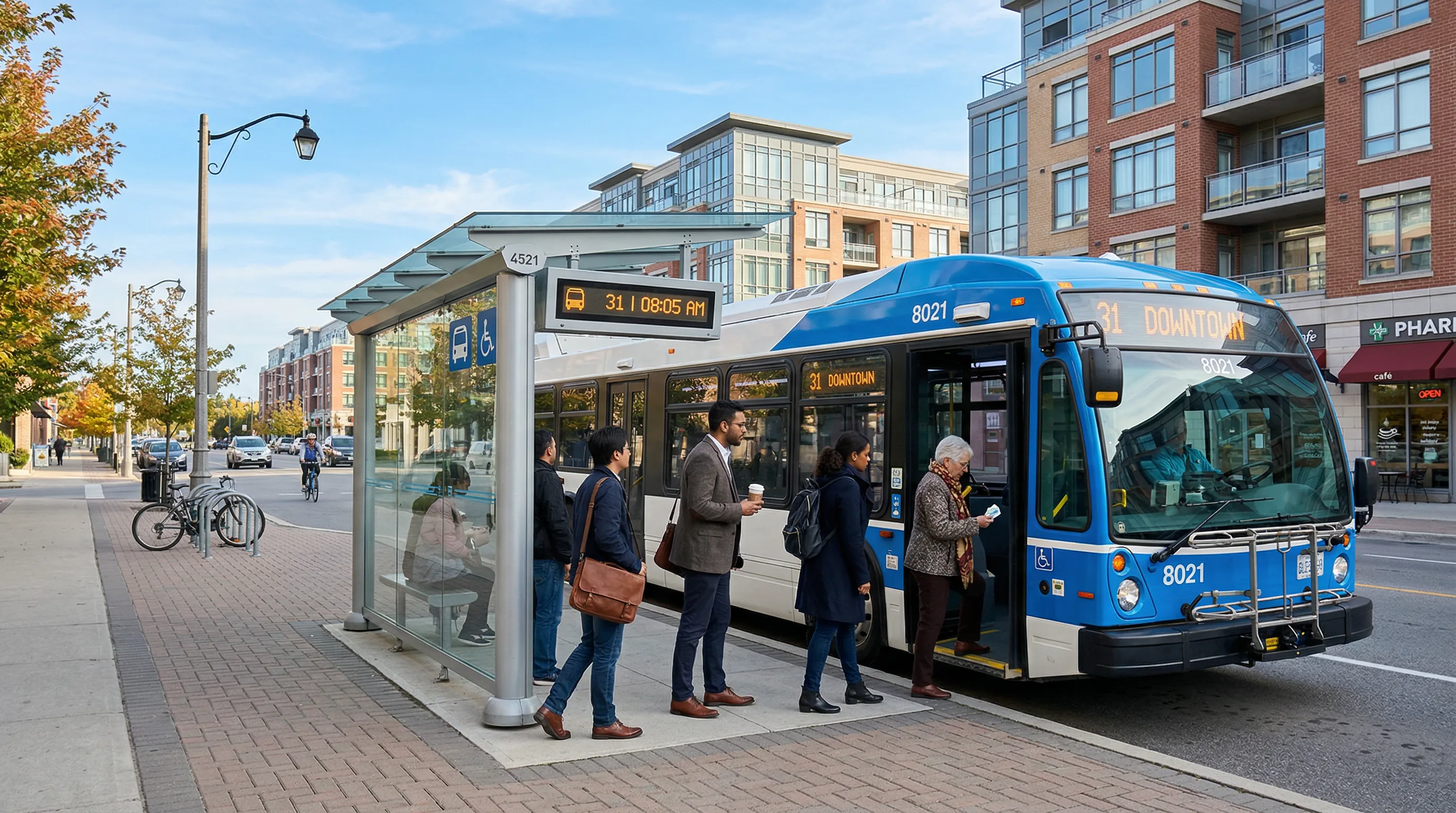
York Region Transit has unveiled its 2026 Annual Transit Plan, and it represents one of the most significant expansions in recent years. The plan calls for 73,000 additional service hours and 33 route and service changes across the region, with several improvements directly benefiting Markham and Richmond Hill commuters.
Ridership across the YRT network is projected to grow by 2.5 million revenue riders this year, driven by population growth, intensification along key corridors, and a steady return to office work across the technology and financial sectors that anchor Markham's economy. The transit agency is responding with more frequent service, new connections, and expanded coverage.
Key Changes Affecting Markham
The 2026 plan focuses on improving frequency along the corridors that matter most to Markham residents. The Viva rapidway along Highway 7 continues to be a priority, with increased peak-period frequency to reduce wait times for riders connecting between Markham Centre, the tech corridor, and the broader GTA.
Several local routes serving residential neighbourhoods in Milliken, Cornell, Berczy Village, and Unionville are also receiving adjustments. In some cases, routes are being extended to reach new developments, while others are being restructured to provide more direct connections to GO Transit stations and the Viva rapid transit network.
One notable change involves the discontinuation of certain low-ridership school special routes, including Route 406 serving Markham District Secondary School. YRT says these resources will be redeployed to routes with higher demand, improving overall system efficiency.
Richmond Hill GO Station Upgrades
In parallel with the transit plan, the Richmond Hill GO Station is undergoing a multi-phase improvement project expected to be completed by October 2026. The upgrades include renovated washrooms, new accessible ramps, tactile platform surfaces, a reconfigured passenger pick-up and drop-off area, and new traffic lights on Newkirk Road.
A new bike lane connecting the main and east parking lots is also planned, supporting the broader push toward multimodal commuting. These improvements are designed to make the station more accessible and user-friendly for the thousands of commuters who rely on it for daily travel to downtown Toronto.
Smart Commute Markham-Richmond Hill
The City of Markham continues to partner with York Region and Richmond Hill on the Smart Commute program, which encourages alternatives to single-occupancy vehicle commuting. The program offers services including carpooling, transit incentives, cycling support, telework guidance, and an emergency ride home program for local employers and their employees.
With the 2026 budget allocating dedicated capital funding for Smart Commute initiatives, the program is expected to expand its outreach to more businesses along the Highway 7 and Highway 404 corridors.
What This Means for Commuters
For Markham and Richmond Hill residents, the 2026 transit expansion translates into shorter wait times on key routes, better connections to GO Transit, and improved access to employment centres and commercial areas. The shift of resources from underperforming routes to high-demand corridors reflects a data-driven approach to transit planning that prioritizes ridership growth.
Riders can view the full list of proposed changes and provide feedback through the YRT website. The implementation of transit changes is dependent on ridership levels and shifting travel patterns, so some adjustments may be phased in throughout the year.
Stay informed about transit and infrastructure updates in your area at MarkhamBusiness.com.
About the Author

Local News Editor
Sarah Chen has been covering local news in Markham and Richmond Hill for over eight years. Before joining MarkhamBusiness.com, she worked as a community reporter and has contributed to several Toronto-area publications. A long-time Markham resident, she lives in the Unionville area with her family and has a special interest in municipal government, public infrastructure, and the rapidly changing demographics of York Region.
View all posts by Sarah →