
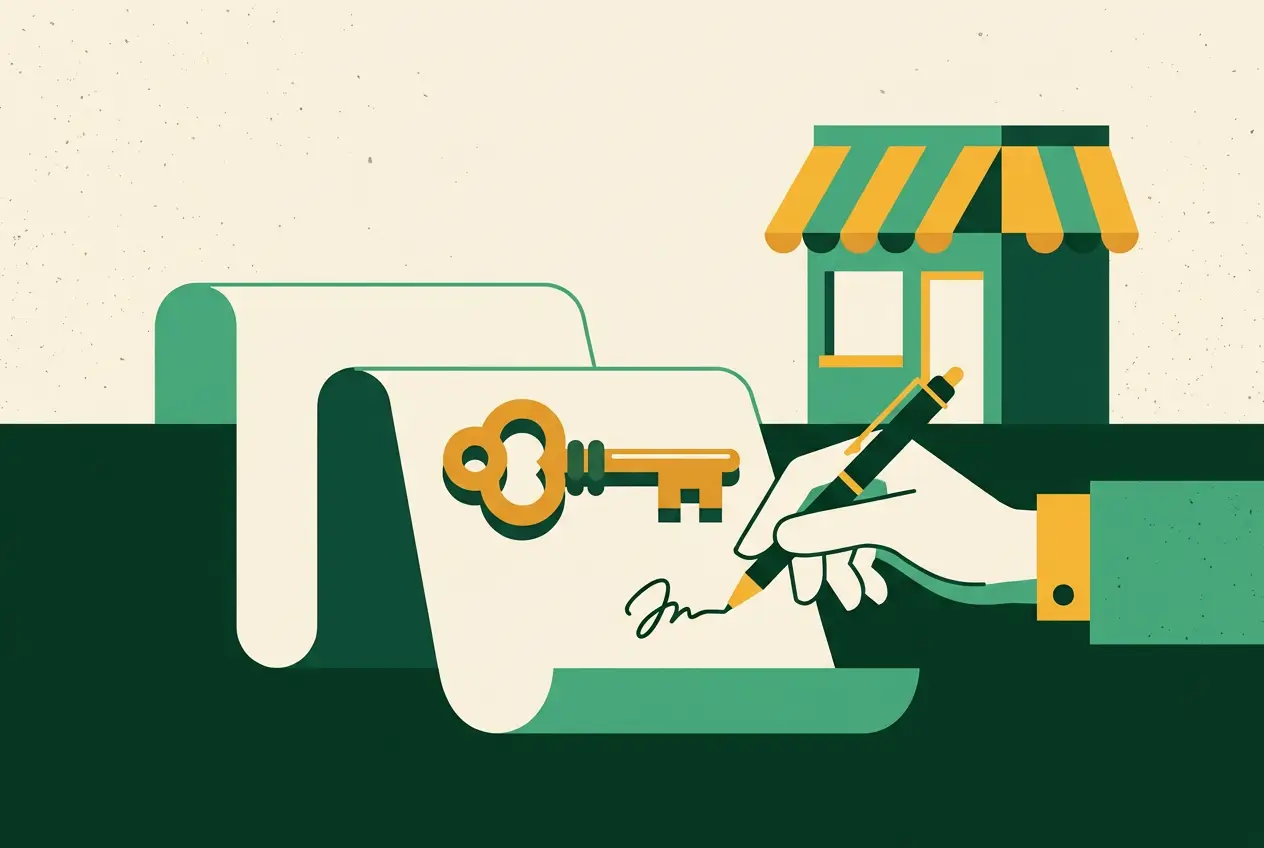
The most consequential document most storefront owners ever sign gets less attention than their phone contract. Commercial leasing in Ontario is largely a matter of whatever the two parties agreed, and the landlord's form agreement was not drafted with you in mind. Before your lawyer sees it, and a lawyer should see it, learn to read these clauses yourself.
The rent is not the rent
Plaza and retail leases are typically net leases: on top of base rent you pay your share of property taxes, insurance, and common-area maintenance, often labelled TMI or CAM. These "additional rent" charges are real money, they move year to year, and they are where budget surprises live. Ask for the current numbers, the history, and what exactly is included before comparing any two spaces on base rent alone.
The personal guarantee
Incorporating does not protect you if you personally guarantee the lease, and most first-time tenants are asked to. Everything here is negotiable in degrees: a guarantee capped at a fixed number of months, one that burns off after a few years of good payment, or an indemnity limited to specific obligations. You may not win, but tenants who never ask always lose.
Assignment: your exit door
If you ever sell the business, the buyer needs your space, which means the landlord's consent to assign the lease. Look for the words "consent not to be unreasonably withheld," and look for what the landlord can demand as a condition. A hostile assignment clause can quietly kill a sale years from now, something we see often enough that it appears in both our selling guide and our buyer's checklist.
The clauses people skim
- Demolition or redevelopment clauses let a landlord end the lease early if the site is redeveloped. In a region rebuilding as fast as this one, that is not theoretical.
- Exclusivity. Without an exclusive-use clause, nothing stops the landlord from leasing the unit three doors down to your direct competitor.
- Permitted use. If the lease says "bakery" and you later add a lunch counter, a narrow use clause becomes leverage against you.
- Renewal options. An option to renew, with the mechanism for setting the new rent spelled out, is the difference between a business with a future and one that renegotiates from its knees.
- Fixturing period. Free-rent weeks for your build-out are common and only exist if you ask.
Before you sign anything
Get the offer to lease reviewed before you sign it, not just the final lease; the offer often binds you to more than people expect. Budget for the review the way you budget for equipment, because it is equipment. And keep every notice deadline, especially renewal windows, in a calendar that will actually alert you. Renewal rights expire quietly.
A commercial-savvy lawyer reads these documents for a living. One hour of theirs, before ink, is the cheapest insurance in small business.
About the Author

Guides & Lifestyle Editor
Daniel Tremblay was born and raised in Markham and has spent his career writing about outdoor recreation, civic life, and community resources across York Region. An avid hiker and trail runner, he has personally walked nearly every public trail in the Rouge National Urban Park and the York Regional Forest. His guides aim to give residents practical, on-the-ground information about the places, services, and routines that shape daily life in Markham and Richmond Hill.
View all posts by Daniel →