
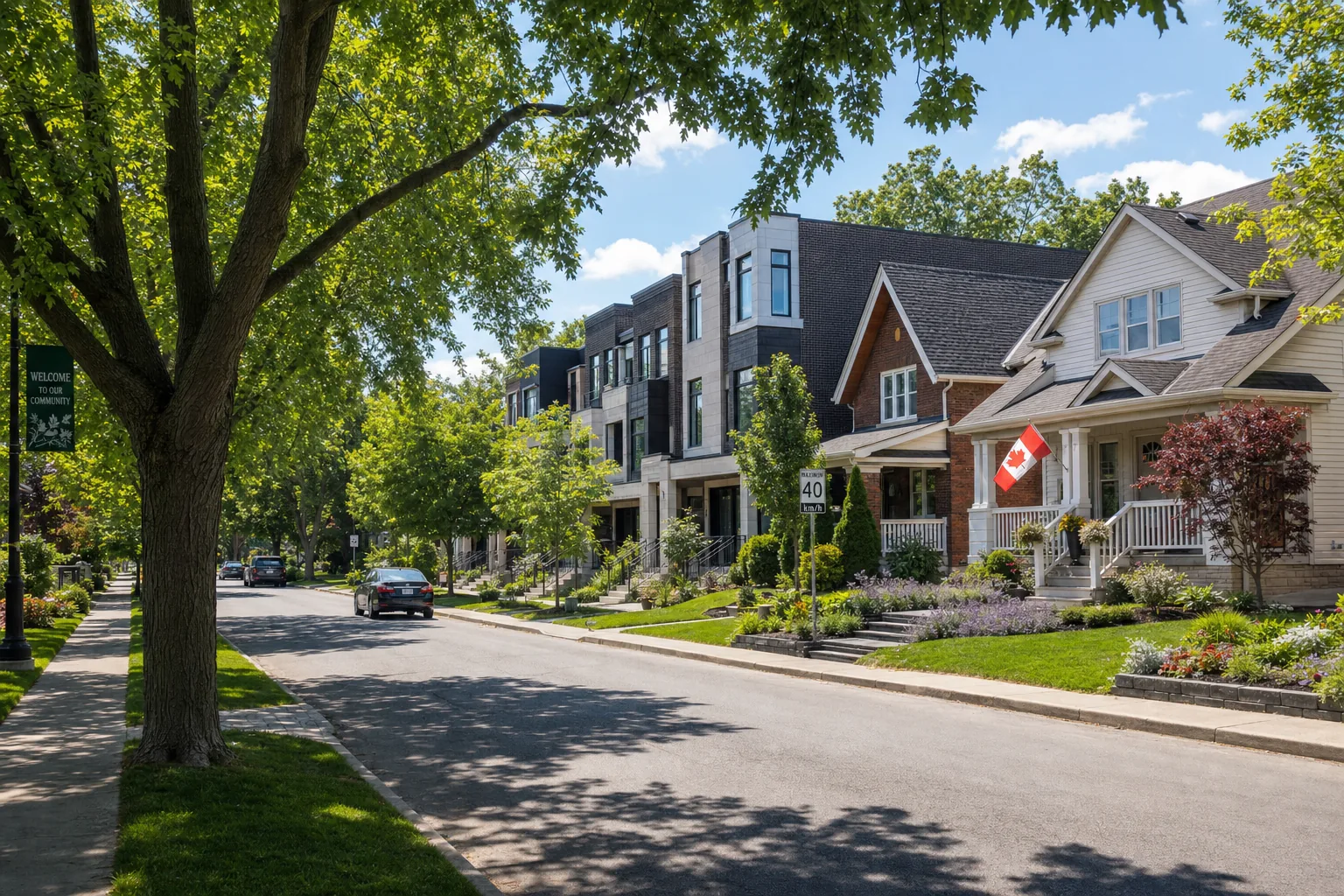
A housing policy decision made in the opening months of 2026 continues to generate significant debate across Markham as the city enters May. Mayor Frank Scarpitti's decision to use strong mayor powers to veto a council-approved fourplex zoning policy has drawn reactions from housing advocates, residents, and planning commentators — and the conversation shows no sign of fading.
The vetoed policy would have allowed property owners to build up to four residential units on land previously zoned for a single dwelling. Permitting such "missing middle" housing density was a requirement tied to the federal Housing Accelerator Fund, a program through which Markham received funding to increase its housing supply. Mayor Scarpitti exercised strong mayor powers — powers introduced by the Ford government in 2022 and extended to municipal mayors — to override the council vote and block the policy from taking effect.
Why the Mayor Vetoed the Policy
In explaining his decision, Mayor Scarpitti cited concerns about transportation networks and parking capacity. His position is that Markham's existing road infrastructure and parking supply were not designed to accommodate the increased density that permitting four units per lot in previously low-density neighbourhoods would generate. Allowing fourplexes as-of-right, the mayor argued, risks compounding traffic and parking pressures in areas that lack the infrastructure to support that level of intensification.
This rationale reflects a perspective held in many established suburban municipalities: that density increases, while potentially desirable at a broad policy level, need to be accompanied by corresponding investments in transportation and community infrastructure if they are to function well in practice.
The Case for the Policy
Housing advocates and critics of the veto have argued that blocking fourplex permissions runs counter to the urgent need to increase housing supply across the Greater Toronto Area, where affordability pressures have made homeownership and rental housing increasingly out of reach for many families and individuals.
The fourplex policy would have expanded the range of housing types available in Markham's established residential neighbourhoods — areas that are well-served by existing community amenities, schools, and proximity to employment — without requiring greenfield development or major infrastructure investment. From a planning theory perspective, gentle densification of low-density neighbourhoods is widely regarded as one of the most sustainable and equitable ways to add housing in growing cities.
Critics of the veto have also pointed to the federal Housing Accelerator Fund conditions that the fourplex policy was designed to satisfy, raising questions about the implications of non-compliance for future federal housing investment in the city.
Markham's Housing Record
Mayor Scarpitti has been consistent in asserting that Markham remains "open to growth." The city points to an ambitious housing approval record: approximately 224,000 housing units approved in Markham's development pipeline, and delivery of 1,943 units against a target of 1,643 through the Housing Accelerator Fund program — a result that exceeds the target.
These numbers reflect a city that has been growing rapidly and has a substantial stock of approved but not yet built housing in the pipeline, much of it in condominium and mid-rise development projects. The debate, then, is partly about form: whether Markham's growth should continue to be concentrated in high-density nodes and purpose-built developments, or whether low-density neighbourhoods should also be opened to incremental intensification through missing middle housing types.
The Ongoing Debate
The conversation about the fourplex veto has continued on local Reddit forums, planning blogs, and in media coverage through April and into May. Perspectives range from strong support for the mayor's infrastructure-focused reasoning to sharp criticism of what some see as a missed opportunity to normalize gentle densification across more of the city's residential fabric.
Strong mayor powers, which allow a mayor to override council decisions under certain conditions, remain a controversial feature of Ontario's current municipal governance framework. The Markham fourplex veto has become one of the more prominent examples in the region of how those powers can be used — and has renewed broader debate about democratic accountability in municipal land use decision-making.
The fourplex policy question is unlikely to be fully resolved in the near term, and may re-emerge as part of broader conversations about Markham's official plan and housing strategy as the city continues to grow.
For more local news and community updates across Markham and Richmond Hill, visit MarkhamBusiness.com.
About the Author

Local News Editor
Sarah Chen has been covering local news in Markham and Richmond Hill for over eight years. Before joining MarkhamBusiness.com, she worked as a community reporter and has contributed to several Toronto-area publications. A long-time Markham resident, she lives in the Unionville area with her family and has a special interest in municipal government, public infrastructure, and the rapidly changing demographics of York Region.
View all posts by Sarah →